Etihad Museum

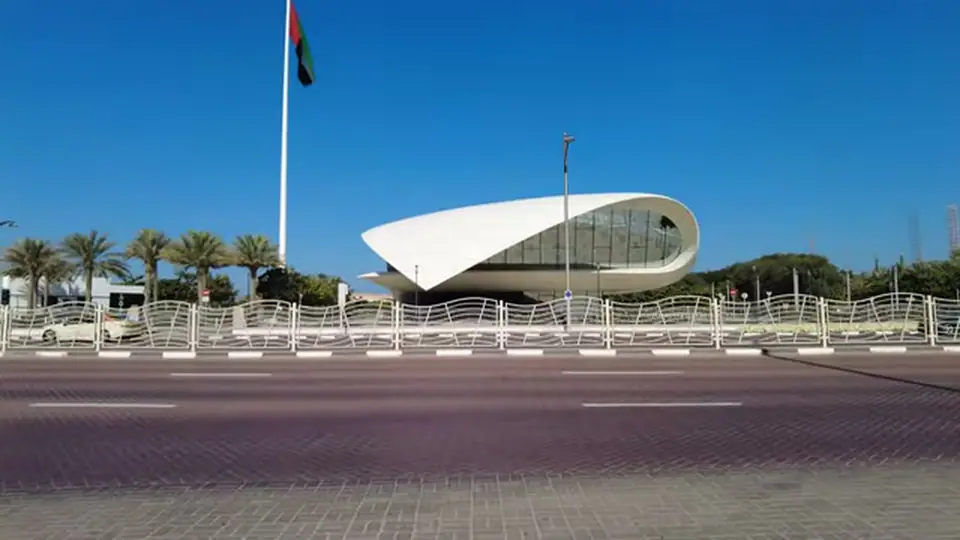
White Etihad Museum exterior with UAE flag and palms by the road.

Why visit

Who will love it

Best for context-seekers: Prioritize Etihad Museum if you want to understand how the modern United Arab Emirates was formed, not just see another Dubai landmark.

It is strongest for adults, history-minded travelers, and families with older children who will appreciate documents, multimedia storytelling, and the significance of its Jumeirah / Al Mina setting.

Who should skip it

Lower its priority if you want dramatic exhibits, a large artifact collection, or a high-energy attraction. Book ahead, allow a focused visit rather than a rushed stop, and pair it with nearby coastal or historic Dubai sights for a calm, meaningful half-day.

What to know beforehand

Etihad Museum is best treated as a focused history visit rather than a casual photo stop. It is perfectly suited for adults, history-minded travelers, and families with older children who are prepared to engage with the narrative of how the UAE was formed; younger children or those expecting a high-energy attraction may find the atmosphere too quiet.

Plan for a visit of 1 to 2 hours and ensure your tickets are arranged in advance to keep your schedule on track. The museum integrates well with a tour of Jumeirah or Al Mina, but it functions best as a deliberate cultural appointment rather than a quick filler between beach time and dinner.

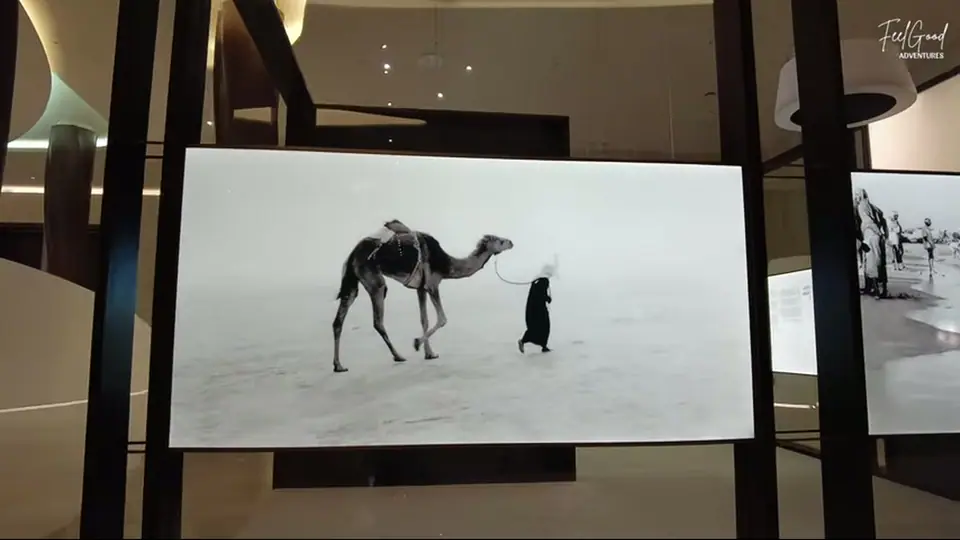
Museum screen shows a camel and guide in a pale desert landscape.

🎫 Tickets, tours & discounts

Which ticket to choose

For most travelers, the standard admission ticket is enough. Etihad Museum is a calm, self-paced history museum, not a ride-based attraction, so there is no strong reason to pay extra for fast-track access or a VIP-style product just to enter faster.

Paying more only makes sense if the upgrade adds a guided explanation, private transport, or a wider heritage route that includes places such as Al Shindagha Museum or Jumeirah Mosque from the outside. The common first-time mistake is buying an expensive “Dubai culture tour” when all you really need is the museum entry and 1–2 unrushed hours inside.

  • Standard entry: best for independent visitors, couples, and families with older children.
  • Guided visit: worth it if you want the political context explained clearly.
  • Combo or city tour: useful only when the route genuinely fits your day, not just because it says “Dubai highlights.”
  • Fast-track/VIP: not necessary for this museum.
ImportantBook before you go rather than treating it as a walk-in stop between beach and dinner plans. The museum is best enjoyed when you are not rushing.

When to go

The best slots are in the morning after opening or in the later afternoon before the final entry window. The galleries are indoors and air-conditioned, so the main timing issue is not heat inside the museum but comfort getting there, group traffic, and how much mental energy you have for reading, films, and interactive displays.

There is no meaningful sunset premium here: golden hour helps exterior photos of the manuscript-like building, but it does not change the museum experience. If you want the quietest visit, go early; if you want better exterior light, go later in the afternoon and allow time outside before or after the galleries.

For solo travelers, morning is the cleanest choice. Families should avoid squeezing it in after a full beach or mall day. Photographers should aim for late afternoon for the exterior, then continue inside for the historical exhibits.

Combos and discounts

Etihad Museum is already one of Dubai’s better-value cultural stops, so savings come from choosing the right category rather than chasing big promo codes. Children under 5 enter free, full-time students aged 5–24 have a reduced ticket, groups of five or more pay a lower per-person rate, and People of Determination enter free with one companion.

The most logical combo is with Al Shindagha Museum, because together they give a stronger picture of the UAE’s formation, Dubai Creek heritage, trade, ruling family history, and everyday Emirati culture. This pairing makes more sense than bundling Etihad Museum with high-cost thrill attractions unless your itinerary already includes them.

City passes such as Go City Dubai are not worth buying just for Etihad Museum. The museum’s standalone price is low, so a pass only makes sense if you will also use it for several higher-priced attractions on the same trip.

TipIf your group has five or more paying visitors, the group rate is the simplest saving. It is more reliable than hunting for third-party discount codes.

When a tour makes sense

A guided tour adds value if you are not already familiar with UAE history. The museum is well designed, but a good guide helps connect the documents, founding fathers, Union House, and the political timeline into one clear story instead of a sequence of screens and displays.

Take a tour if you are visiting as a family with teenagers, studying the region, hosting guests, or trying to understand Dubai beyond skyline attractions. Skip the tour if you enjoy reading panels, watching short films, and moving at your own pace; the self-guided route is complete enough for a thoughtful 1–2 hour visit.

View tickets

Weather nowDust in the air
Dubai, United Arab Emirates
NowClear night 🌙
Temperature32°C
VisibilityModerate
AerosolsDusty · AOD 0.46

Conditions are mixed — plan accordingly and check for covered areas.

AOD — how much dust and haze in the air dim the distant view. 0 clean, >0.4 noticeable, >0.7 heavy.

Crowd indicator

Mini-calculator based on crowd levels by day and time.

When to go?

Mini-calculator based on crowd levels by day and time.

Best time at Mon — 18:00

This day is usually calmer than average. This slot has a higher chance of a comfortable visit: compromise between light and visitor flow. Weather is currently not ideal: clear night 🌙.

30–50% · Quiet60–80% · Moderate90–100% · Crowded

Nearest days

Today
10:0030%
12:0050%
14:0055%
16:0065%
17:0070%
18:0045%
Tomorrow
10:0030%
12:0050%
14:0055%
16:0065%
17:0070%
18:0045%
Day after tomorrow
10:0030%
12:0050%
14:0055%
16:0065%
17:0070%
18:0045%

How to find the entrance

1
Taxi Drop-OffAsk for Etihad Museum, 1 Jumeirah St, Al Mina; taxis drop close to the museum grounds.
2
Standalone SiteDo not look for a mall entrance; the museum sits on its own low-rise complex beside Union House.
3
Follow Museum SignsWalk into the museum territory and follow Etihad Museum signs toward the main visitor entrance.
4
Ticket Check-InHave tickets ready before the desk; delays here are the main entrance friction, not the walk inside.

Go to Etihad Museum at 1 Jumeirah Street, Al Mina, Dubai. The practical landmark is Union House and the large UAE flag; tell your taxi driver “Etihad Museum, Union House” rather than just “Jumeirah,” because this edge of Jumeirah/Al Mina has several coastal landmarks close together.

The easiest arrival is by taxi or car directly to the museum drop-off or on-site parking. This is not a mall-style attraction, and there is no long indoor mall route to find the entrance: look for the main museum entrance on the Etihad Museum site.

The nearest useful Dubai Metro stop is Max Metro Station on the Red Line, but it is not a comfortable first-time walk to the museum. From the metro, take a short taxi ride; this avoids heat, road crossings, and confusion around Jumeirah Street.

ImportantBook your ticket before going. The main time loss here is not inside a mall or elevator system — it is arriving without a clear drop-off plan or without your ticket ready at the entrance.

Practical limits & what to bring

What to consider before visiting

Etihad Museum is calm, indoor, and orderly, but it is not a quick “photo stop.” Expect a paced museum visit with reading, screens, documents, and some standing between galleries. Book tickets in advance; arriving without a ticket adds unnecessary friction at the entrance desk.

The museum is accessible, with wheelchair-friendly facilities, accessible toilets, regular toilets, prayer rooms, Wi‑Fi, and free wheelchairs for elderly visitors, pregnant visitors, and people of determination, subject to availability.

The site is not beside a metro station: from Al Jafiliya on the Red Line, the final stretch is too long to treat as a comfortable museum walk, especially in heat, so a taxi is the practical choice.

There is no special tourist dress code published for Etihad Museum. Dress as you would for a cultural public building in Dubai: neat, comfortable, and modest enough for an official museum setting. Comfortable shoes are more useful than dress shoes.

What you can and cannot bring

  • Food from outside is not allowed inside the museum premises.
  • Eating is not allowed inside the museum premises.
  • Drinking is not allowed inside the museum premises.
  • Chewing gum is not allowed inside the museum premises.
  • Smoking is not allowed inside the museum premises, including outdoor areas.
  • Do not sit or lean on exhibits or glass cases.
  • For note-taking in the galleries, use pencils rather than pens.
  • Photography and video are allowed with cameras, mobile phones, and tablets.
  • A phone, wallet, small day bag, and light personal essentials are sensible to bring.
ImportantThis is a museum visit, not a luggage-friendly stop between hotel checkout and the airport. Keep your bag small and avoid bringing anything you would not want to carry through the galleries.

Storage and belongings

Etihad Museum does not offer a visitor locker or cloakroom system that should be planned around for suitcases or large bags. Leave bulky luggage at your hotel, in your car, or with a luggage-storage service before arriving at 1 Jumeirah Street, Al Mina.

No public rule requires standard strollers to be left outside, and the museum’s accessible layout makes a compact stroller the sensible choice for families. Avoid oversized prams if you want an easier route through reception, lifts, and gallery spaces.

Location and what's nearby

What kind of district

  • This edge of Jumeirah and Al Mina feels low-rise, civic, and residential, not like Downtown Dubai or Dubai Marina.
  • The museum sits in a national-history pocket: Union House, the Dubai Flagpole, and Jumeirah Mosque give the area a quieter UAE context.
  • It fits a compact culture-and-neighborhood day: museum visit, mosque exterior, beach air, then Satwa or Jumeirah for food.
  • The area is not a dense sightseeing grid; the best nearby stops are selective, spread-out, and calmer than Dubai’s mall districts.

Within 15 minutes on foot

  • Dubai Flagpole — huge national flag beside the Union House site · 3 min
  • Union House — historic signing building beside the museum campus · 4 min
  • Jumeirah Mosque — landmark mosque with strong cultural context · 11 min
  • Jumeirah Beach north stretch — simple sea-air pause after the museum · 12 min
  • Al Ghazal Mall — old-school neighborhood mall for a quick pause · 12 min
  • 2nd December Street — everyday Satwa-edge strip with casual local eating · 15 min

15-30 minutes by transport

  • Al Fahidi Historical Neighbourhood — extends the UAE-history theme into old Dubai · 12 min by taxi
  • Dubai Creek — classic abra views and older trading-city atmosphere · 15 min by taxi
  • Al Seef — Creekside walk with heritage-style shops and cafes · 15 min by taxi
  • Dubai Frame — easy contrast between old Dubai and skyline views · 15 min by taxi
  • Kite Beach — relaxed Jumeirah beach stop after a quiet museum visit · 18 min by taxi

Where to eat nearby

  • 11 Woodfire — Michelin-starred open-fire cooking · expensive · booking required · 9 min by taxi
  • Ravi Restaurant Satwa — Pakistani grills and curries · budget · walk-in okay · 7 min by taxi
  • Al Mallah Satwa — Lebanese shawarma and juices · budget · walk-in okay · 7 min by taxi
  • Arabian Tea House Jumeirah — Emirati breakfast and courtyard-style dining · mid-range · reservation recommended · 8 min by taxi
  • Bu Qtair — spiced fried seafood by the harbour · mid-range · walk-in okay · 15 min by taxi

Ready-made day route

Start at Jumeirah Mosque for neighborhood context, then walk to Etihad Museum and the nearby Dubai Flagpole and Union House area. After the museum, take a short beach pause on the Jumeirah side, then head to Al Mallah Satwa for an easy casual meal or to 11 Woodfire for a more polished dinner.

If you want to extend the day, continue by taxi to Al Fahidi Historical Neighbourhood or Dubai Creek for the older trading-city side of Dubai.

NoteDo the museum before the beach or Creek; the history lands better first, and the outdoor stops feel easier afterward.
Reference

Facts

Read more

Verified Numbers and Scale

  • Area: 25,000 m², so the visit feels like a compact cultural campus rather than a single-room museum.
  • Main structure: 2,000 m² pavilion plus 10,000 m² underground museum space, keeping most galleries below the plaza.
  • Public opening: 7 January 2017, making it one of Dubai’s newer national-history museums.
  • Historic date: 2 December 1971, when the UAE’s founding agreement was signed at Union House on this site.
  • Union House: built in 1965, giving the museum a real political landmark rather than a purely symbolic location.
  • Exhibition layout: 8 permanent pavilions, useful for following the story in a clear chronological sequence.
  • Flagpole: 120 m, marking the site from the Jumeirah and Al Mina approach roads.

Myths and Misconceptions

  • Myth: Etihad Museum is in Abu Dhabi. In fact: It is at 1 Jumeirah Street, Al Mina, Dubai.
  • Myth: It is about Etihad Airways. In fact: “Etihad” means “union”; the museum explains the UAE’s formation.
  • Myth: It is the same as Dubai Museum. In fact: Dubai Museum is in Al Fahidi Fort; Etihad Museum is in Jumeirah.
  • Myth: The whole museum is an old palace. In fact: The main museum is modern, integrated with restored historic buildings.
  • Myth: All seven emirates signed together on 2 December 1971. In fact: Six formed the UAE then; Ras Al Khaimah joined in 1972.

Rare and Unusual

  • The roof is shaped like a folded manuscript, a direct architectural reference to the UAE Constitution.
  • The seven leaning columns represent the pens used to sign the union agreement, not minarets or abstract sculpture.
  • Much of the museum is underground, including galleries, theatres, event spaces, and archival facilities.
  • Lightwells bring daylight into the lower galleries, so the underground route does not feel like a basement.
  • The restored Union House preserves the circular setting where the signing took place.
  • The reflecting pool and sandy beachfront recreate the old Jumeirah shoreline context around the founding site.
Background

History

Read more

Why this place matters

Etihad Museum stands beside Union House, the site tied to the signing of the agreement that created the United Arab Emirates on 2 December 1971. That makes the museum more than a general history stop: it is built around the country’s founding moment and the political decision that turned separate emirates into one federation.

The museum focuses on the people, documents, discussions, and symbols behind that union. Instead of overwhelming visitors with objects, it uses films, photographs, maps, and interactive displays to explain how the UAE’s modern identity was formed.

For today’s visitor, this context helps make sense of Dubai beyond towers, beaches, and shopping malls. Etihad Museum shows the national story behind the city’s rapid growth, and it is most rewarding if you want a calm, structured introduction to the UAE rather than a spectacle.

♿ Accessibility & families

Accessibility & family policy

  • Wheelchair users: Etihad Museum has step-free access from street level via ramp, elevators between levels, and wide, smooth gallery paths. Some exhibition areas include long sloped sections, so manual wheelchair users and reduced-mobility visitors may find a companion helpful. Complimentary wheelchairs are available for People of Determination, elderly visitors, and pregnant visitors, subject to availability.
  • Strollers: Strollers can be used on the main visitor route; the museum is stroller-friendly thanks to lifts and flat indoor galleries. There is no need to leave a stroller at the entrance for a standard visit.
  • Children and tickets: Children under 5 enter free. Students aged 5–24 pay AED 10, while adult admission is AED 25. People of Determination enter free with one companion; present the relevant ID/card at the ticket counter.
  • Family comfort notes: This is an indoor, air-conditioned history museum with toilets throughout the site and prayer rooms. It suits school-age children better than toddlers: much of the experience is documentary, interactive, and text-led rather than play-based. The main friction points are the quiet museum setting, films/interactives that may not hold very young children for long, and the sloped sections for visitors who tire easily.

🏢 On-site amenities

On-site amenities

  • Restrooms: Toilets are available throughout the Etihad Museum site, including the visitor areas around the main exhibition route. They are not separately paid; access is part of the museum visit.
  • Cafe / restaurant: Hint Cafe is on-site at Etihad Museum, listed on the 4th floor. It is a casual cafe-style stop rather than a formal fine-dining restaurant, with coffee, desserts, pastries, and light meals.
  • Gift shop: There is a museum gift shop / retail area. Expect UAE-history-themed souvenirs, books, educational items, and small gifts rather than a large mall-style shopping area.
  • Prayer rooms: Prayer rooms are available inside the museum complex. Outside food and drink are not allowed in the museum premises, so plan to use the cafe rather than carrying snacks into the galleries.

Reliability & freshness

UpdatedJune 2, 2026

I live in Dubai and, after seven years here, I write clear guides on getting around, costs, and daily life in the UAE.