Who will love it
Price from: Free entry Duration: 1–2 hours Best time: 10:00 AM or after 8:00 PM Booking required: No District: Deira

Price from: Free entry Duration: 1–2 hours Best time: 10:00 AM or after 8:00 PM Booking required: No District: Deira
Prioritize the Gold Souk if you are looking for high-purity gold jewelry or investment bars at government-regulated rates. It is an essential stop for those who enjoy the high-energy atmosphere of a traditional market and are prepared to bargain hard on the "making charges" to secure a deal.
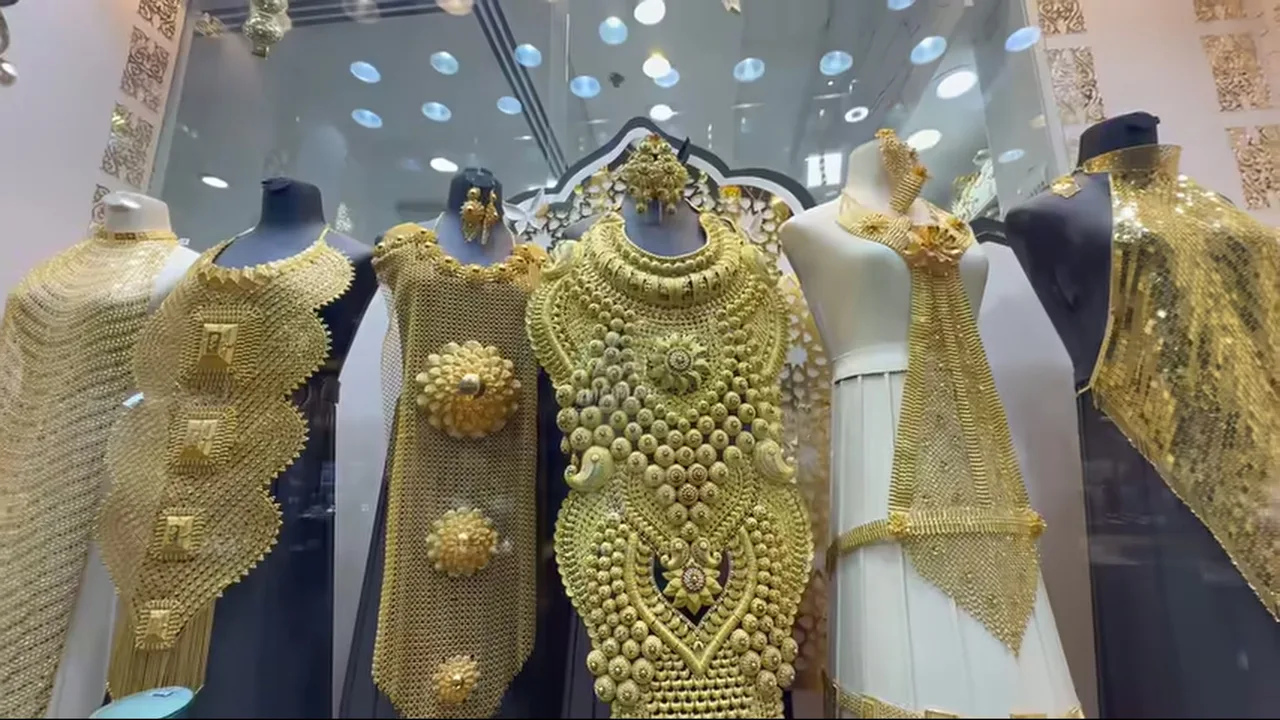
The sheer scale of the displays, including world-record-sized rings, makes it a unique cultural experience even for window shoppers.
The Gold Souk is best approached as a sensory experience rather than a standard retail trip. While the sheer volume of 22k and 24k gold is staggering, the environment is intense; expect persistent street touts and a constant push for your attention.
Serious buyers will appreciate the regulated transparency of gold prices, but casual visitors often find the aggressive haggling required for the "making charge" more exhausting than rewarding.
Those who enjoy historical grit and the thrill of a bargain will find the maze fascinating, especially when combined with a 1 AED abra ride across the Creek.
However, if you prefer a climate-controlled, low-pressure environment, the jewelry sections in major malls offer the same gold at the same market rates without the humidity or the need to defend your personal space.
Pro Tip: Always check the official retail gold rate on the digital displays near the souk entrance to know the day's baseline price in AED before starting any negotiation.
Entry to the Gold Souk is entirely free as it is a public historical trading area in Deira. You do not need to buy tickets, book time slots, or obtain passes to walk through the market and view the displays.
The most common mistake is paying for specialized "shopping tours" or taking a hotel taxi where the driver promises to show you "the best verified shops." It is easy and inexpensive to reach the market independently: take the Metro to Al Ras Station (Green Line) or cross the Dubai Creek on a traditional wooden abra for 1 AED.
The optimal time to visit is early morning, immediately after shops open around 10:00 AM, or in the evening after sunset. In the morning, the narrow streets are free of large tour groups, the heat is manageable, and shopkeepers are often more willing to offer better deals to their first customers of the day.
In the evening, the heat subsides and the brilliant shop lighting creates a classic Arabian atmosphere. This is the best time for photography, though the crowds reach their peak density. Families with children or those who dislike noise should stick to the morning hours to avoid the evening rush and the more aggressive street hawkers.
Since entry is free, tourist passes like Go City Dubai do not apply here. The primary way to save money is through skillful bargaining during a purchase.
The price of the metal itself per gram is fixed daily by the Dubai government in AED and is displayed on electronic boards throughout the market. This base price is non-negotiable. Your discount comes exclusively from the "making charge"—the fee for the jeweler's labor and design.
Negotiate the making charge firmly. With a persistent approach, you can often reduce the initial labor quote significantly. Note that for investment bars or coins, the markup is already minimal and strictly regulated, leaving almost no room for bargaining.
Booking a group or private tour is only worthwhile for historical context. Comprehensive walking tours of Old Dubai—which typically include the Al Fahidi Historical Neighborhood, an abra crossing, and the Spice Souk—are excellent for a first-time introduction to the city.
A guide helps you navigate the labyrinthine streets and provides protection from persistent vendors selling counterfeit goods.
A solo visit is much better if your primary goal is buying jewelry. Guides often lead groups to specific partner shops where a hidden commission is built into the final price of your item. For serious shopping, always go unaccompanied to ensure you are dealing directly with the merchant without intermediaries.
Entry to the Dubai Gold Souk is entirely free for all visitors. There are no official entry tickets, VIP passes, or fast-track options required to explore the market lanes. You can walk through the historic covered arcades and view the record-breaking jewelry displays, such as the world's heaviest gold ring, without spending a single dirham.
The only financial decision involves your purchase strategy. While the price of gold per gram is fixed by the government and updated several times a day, the "making charge" (the fee for the craftsmanship) is where the real cost varies.
The most common mistake for first-time visitors is accepting the first price quoted by a merchant. You are expected to negotiate the labor cost aggressively, as this is the only flexible part of the transaction.
To experience the market without the overwhelming density of tour groups, arrive in the morning between 10:00 AM and 11:00 AM. During these hours, the heat is manageable and the shopkeepers are just beginning their day, often making them more patient during negotiations.
If you prefer a more energetic atmosphere, the hours after 8:00 PM are the most vibrant, though the lanes become very crowded and the number of street touts increases significantly.
For photographers, the hour just before sunset provides the best natural light as it filters through the traditional wooden roof structures. Families should prioritize the morning slots to avoid the evening rush, while solo travelers looking for the best deals should visit during the mid-afternoon when foot traffic slows down slightly.
As a public market with no entrance fee, the Gold Souk does not offer traditional combo tickets. However, it is a primary stop on many organized "Old Dubai" itineraries. If you hold a Go City Dubai Pass or a Dubai Explorer Pass, a guided walking tour of the Deira district is usually included.
these tours often bundle the Gold Souk with the nearby Spice Souk and a traditional abra boat ride across the Dubai Creek.
There are no specific discounts for residents or children on the gold itself, as the metal price is tied to the international market. To save money, consider paying in cash (AED). While most shops accept major credit cards, paying in cash often gives you more leverage when negotiating the making charge, as it eliminates the merchant's transaction fees.
A guided tour is valuable if you want to understand the historical context of the Deira district and the evolution of the gold trade in the Emirates. A guide can also act as a helpful barrier against the persistent street touts who frequently approach tourists to sell counterfeit goods.
If you are nervous about the haggling process, a local guide can provide tips on how to spot quality and what a reasonable labor fee should look like.
You can easily skip the tour if you prefer to explore at your own pace. The market is geographically small and easy to navigate independently. If you are comfortable firmly declining unwanted offers from street sellers and enjoy the sensory overload of a traditional bazaar, a self-guided visit is the most authentic way to experience the souk.
Important: Always check the official daily gold rate displayed on electronic screens at the entrance of the market. This price is non-negotiable and serves as your baseline before you start bargaining for the jewelry's design fee.
Mini-calculator based on crowd levels by day and time.
Mini-calculator based on crowd levels by day and time.
This day has average visitor density. This slot has a higher chance of a comfortable visit: fewer people and calmer pace. Weather is currently not ideal: clear night 🌙.
Address: Al Dhagaya, Deira, Dubai Nearest metro: Gold Souk Metro Station (Green Line) District: Deira
The Dubai Gold Souk is a traditional open-air market district rather than a single building with a formal lobby. Most visitors enter the area from the Gold Souk Metro Station or by taking an Abra (water taxi) across the Creek to the Deira Old Souk station.
From either point, a five-minute walk leads you into a network of pedestrian alleys covered by high wooden lattice roofs that provide shade.
The most confusing part of the arrival is navigating the persistent street touts who gather near the entrances. These individuals will approach you to offer watches, handbags, or "hidden" shops.
To reach the legitimate gold retailers, ignore these offers and continue toward the main thoroughfares where the large, brightly lit window displays of major jewelry chains are visible.
There are no tickets, security checkpoints, or entrance fees to worry about. You are free to wander the lanes at your own pace. However, the area becomes extremely congested in the late afternoon and evening, which can make moving between shops slow. For the calmest experience, arrive shortly after the shops open in the morning.
The Gold Souk is an open-air historical district, not a climate-controlled mall. Expect high humidity and temperatures during the day, as the wooden roofing provides shade but does not block the heat. The area is a dense labyrinth of narrow alleys that are constantly packed with tour groups and delivery carts, making rapid movement impossible.
While there is no formal dress code for the public streets, this is a traditional part of Deira. You should wear modest clothing that covers shoulders and knees to remain respectful and avoid unwanted attention.
The most comfortable times to visit are early morning when shops open or late evening after sunset when the gold displays are most vibrant under the lights.
There are no security checkpoints or bag scans at the entrances to the market, but local regulations and the crowded environment impose certain limits:
There are no public lockers, cloakrooms, or luggage storage facilities within the Gold Souk. You must be prepared to carry all your belongings with you throughout the visit. Avoid bringing large suitcases or heavy bags, as the uneven pavement and dense crowds make them extremely difficult to manage.
Strollers are technically allowed, but navigating them through the narrow, crowded aisles is highly impractical. If you are traveling with a small child, a wearable carrier is a much more effective option. If you arrive by metro at Al Ras or Gold Souq stations, be aware that these stations also do not provide luggage storage services.
Start your morning at the Al Ahmadiya School and Heritage House to see how Dubai lived a century ago. Walk through the Dubai Gold Souk to admire the record-breaking jewelry displays before exploring the aromatic Spice Souk next door.
Grab a casual lunch at Al Baghdadi Al Falafel, then head to the Deira Old Souk Abra Station to cross the water. Spend your afternoon wandering the Al Fahidi Historical Neighborhood and finish the day with dinner at Bayt Al Wakeel overlooking the Creek.
The Dubai Gold Souk originated as a vital trading post for merchants crossing the Gulf, establishing Deira as a commercial powerhouse long before the era of skyscrapers. Its growth was driven by strategic trade policies and a central location, eventually earning Dubai the global reputation as the City of Gold.
Today, it stands as a preserved piece of the city’s mercantile history, where hundreds of retailers operate under traditional wooden-latticed walkways.
What makes this market unique is the blend of government regulation and old-world haggling. The price of the gold itself is linked to international market rates and updated daily to ensure transparency for every gram sold.
However, the final price in AED depends entirely on your ability to negotiate the craftsmanship fee, making the souk a place where traditional bargaining skills are still a financial necessity.
Beyond the commerce, the souk serves as a living gallery of jewelry design, ranging from delicate 18-karat pieces to massive, ceremonial 24-karat Arabic necklaces. It is a high-energy environment filled with the calls of vendors and the glow of thousands of kilograms of precious metal on display.
For the best experience, visit in the early morning to avoid the largest crowds or late in the evening when the district is at its most atmospheric.
The Gold Souk is located in the historic Deira district and consists of wide, level pedestrian thoroughfares. The main walkways are paved with smooth tiles, making the primary outdoor areas fully accessible for wheelchair users and visitors with reduced mobility.
While the main streets are easy to navigate, many individual jewelry boutiques are small and have a single step at the entrance, which may limit access to shop interiors for those in wheelchairs.
There are no age restrictions or entry fees to visit the Gold Souk. Parents with strollers can move through the main market area easily, though a compact stroller is recommended for navigating the narrower side alleys and the heavy foot traffic that occurs in the evenings.
Children under 16 should remain under adult supervision at all times due to the density of the crowds and the active commercial environment.
* Climate: The market is covered by a traditional wooden roof that provides significant shade, but the walkways are not air-conditioned. Individual shops are climate-controlled, providing a brief respite from the heat.
* Facilities: There are no dedicated nursing rooms or specialized family stations within the souk itself. Basic public restrooms are available in the area, but for modern baby-changing facilities, the nearby Gold Center or Al Shindagha City Centre are the most reliable options.
* Crowd Management: The souk is most crowded between 6:00 PM and 9:00 PM. Families with young children or those sensitive to noise may prefer a morning visit when the atmosphere is calmer and the walkways are less congested.
Public toilets are available near the mosques within the district and inside the modern Gold Souk Extension. These facilities are generally free to use. Dedicated prayer rooms for both men and women are located at the mosques situated within a short walk from the main jewelry rows.
The souk is filled with small, casual cafeterias and juice stalls where you can buy karak tea, fresh fruit juices, and snacks. While there are no public water fountains, chilled bottled water is sold at almost every corner grocery store for 1 AED to 2 AED.
For more substantial meals, local Arabic and Indian restaurants are located along the perimeter streets.
While gold and diamonds are the primary focus, shops also sell silver, pearls, and luxury watches. There is no district-wide free Wi-Fi, so visitors should rely on local mobile data for navigation. Most established jewelry stores are equipped with powerful air conditioning, providing a necessary escape from the outdoor heat while you browse.