Who will love it
Weekday mornings for a calmer visit and better photo opportunities
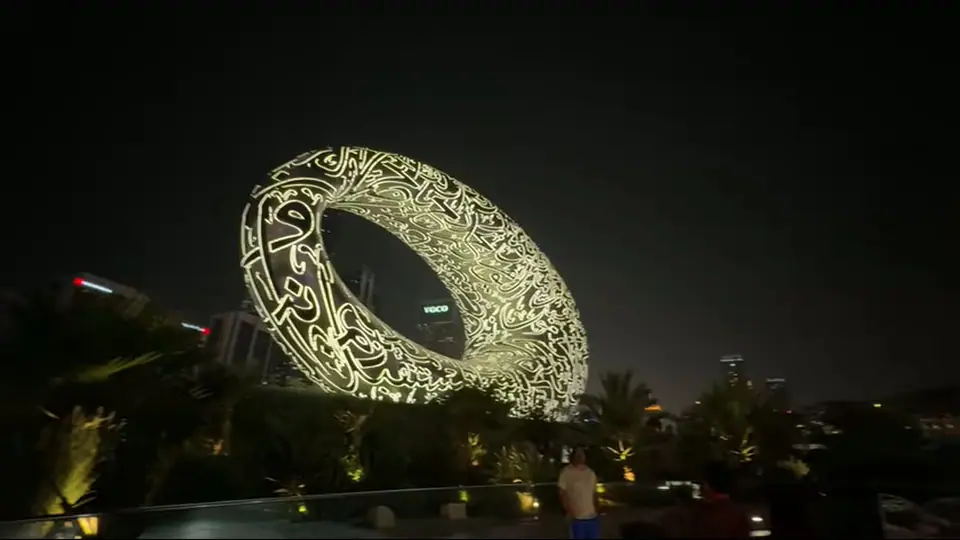

Weekday mornings for a calmer visit and better photo opportunities
Sheikh Zayed Road
The Museum of the Future is less a collection of artifacts and more a sensory journey through speculative scenarios. It is a must-visit for those who value architectural brilliance and immersive digital art, but it may underwhelm anyone expecting a technical science center with dense data.
Because the experience follows a strict one-way path from the top floor down, you cannot return to a previous hall once you have exited; prioritize your time at the viewing platform and the sensory 'Al-Waha' space before moving to the lower levels.
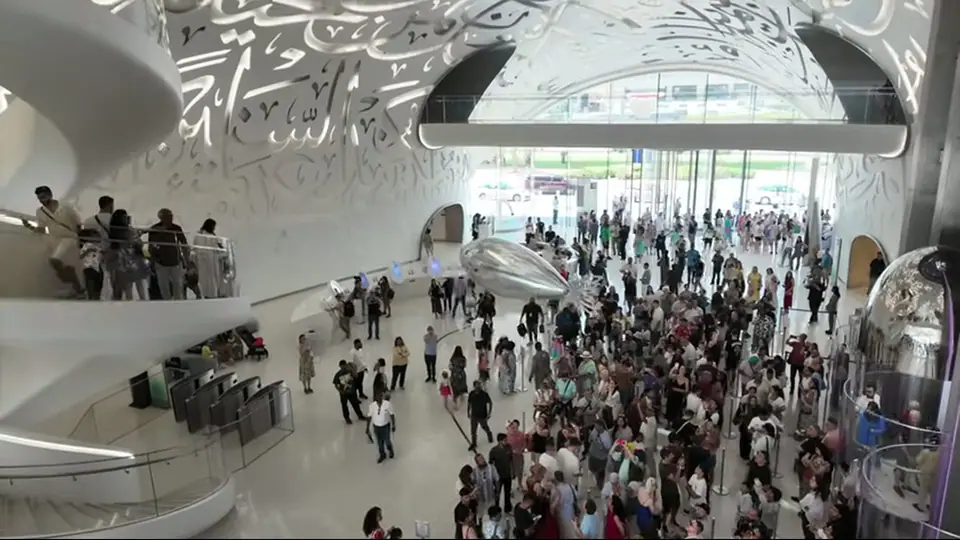
Logistically, the biggest constraint is availability, as tickets frequently sell out weeks ahead. To avoid the feeling of being rushed through the narrative by a crowd, aim for the earliest morning slots on a weekday.
If you are arriving by the Dubai Metro, account for a 15-minute walk through the bridge from Emirates Towers Station to ensure you reach the entry point before your scheduled time slot begins.
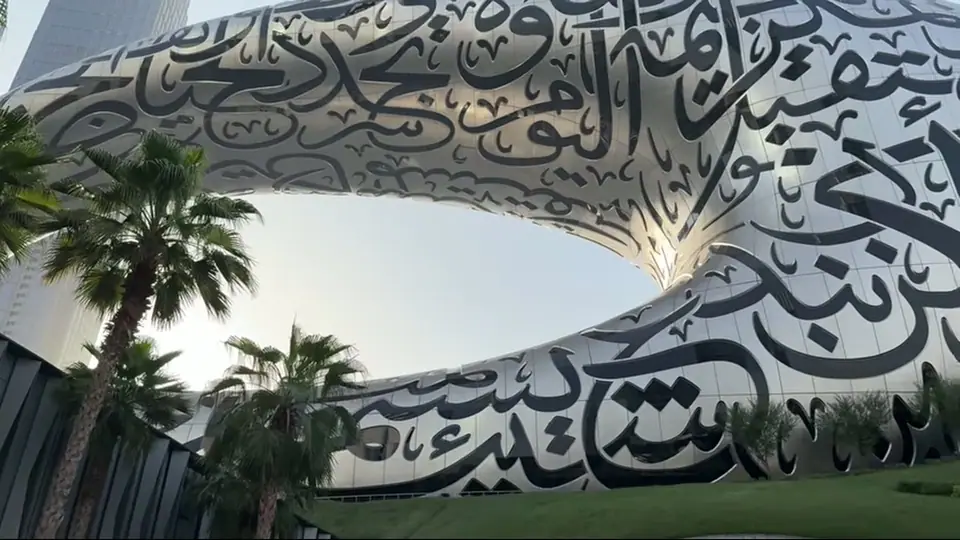
Editorial tip: The viewing deck offers the best perspective of the building's intricate calligraphy, but it is small—visit this area immediately when you reach that floor to avoid the queue.
The standard entry ticket, priced from 149 AED, is the most practical choice for almost every visitor. It provides full access to all five chapters of the museum, including the orbital station simulation, the DNA library, and the futuristic viewing deck.
While premium or "Pioneer" passes exist to offer priority entry or flexible arrival times, they come at a significant markup that rarely justifies the cost if you arrive on time for your scheduled slot.
The most common mistake is assuming you can buy tickets at the door. The museum operates on a strict pre-booked capacity, and slots often sell out two to three weeks in advance. If you show up without a digital booking, you will likely be turned away.
The museum is open daily from 10:00 to 21:30. To experience the installations without heavy crowds, aim for the earliest morning slots between 10:00 and 11:30 on weekdays. By mid-afternoon, the viewing platform and the "Al Waha" wellness floor become crowded, which can diminish the immersive, meditative atmosphere the museum intends to create.
For photographers, the late afternoon provides the best light for the outdoor viewing deck, where you can capture the contrast between the building's Arabic calligraphy and the skyscrapers of Sheikh Zayed Road. However, families should prioritize the morning to ensure children have more space in the "Future Heroes" dedicated play zone.
Direct discounts on the 149 AED ticket are rare, but you can save by using city-wide passes. The Museum of the Future is included in the Go City Dubai Pass and the Dubai Explorer Pass. If you plan to visit other major sites like At The Top Burj Khalifa or the Dubai Aquarium, these passes offer a better collective rate than buying individual tickets.
Children under the age of 4 and People of Determination (along with one companion) enter for free. Even for free entry, you must reserve a $0 ticket on the booking platform in advance to ensure entry.
There are currently no lower rates specifically for UAE residents, though an Emirates ID is required for verification of certain age-based or accessibility tickets.
For most visitors, a private guided tour is unnecessary. The museum is designed as a linear, sensory journey where "storytellers" (staff members) are stationed on every floor to explain the concepts and interact with guests. The narrative is intuitive, and the visual storytelling is strong enough to stand on its own.
A specialized tour only makes sense for those deeply interested in the engineering and architectural marvel of the building itself—such as the 1,024 unique stainless steel panels or the column-free interior. If your goal is simply to explore the visions of the future, a self-guided visit is perfectly sufficient.
Mini-calculator based on crowd levels by day and time.
Mini-calculator based on crowd levels by day and time.
This day has average visitor density. This slot has a higher chance of a comfortable visit: fewer people and calmer pace. Weather is currently not ideal: clear night 🌙.
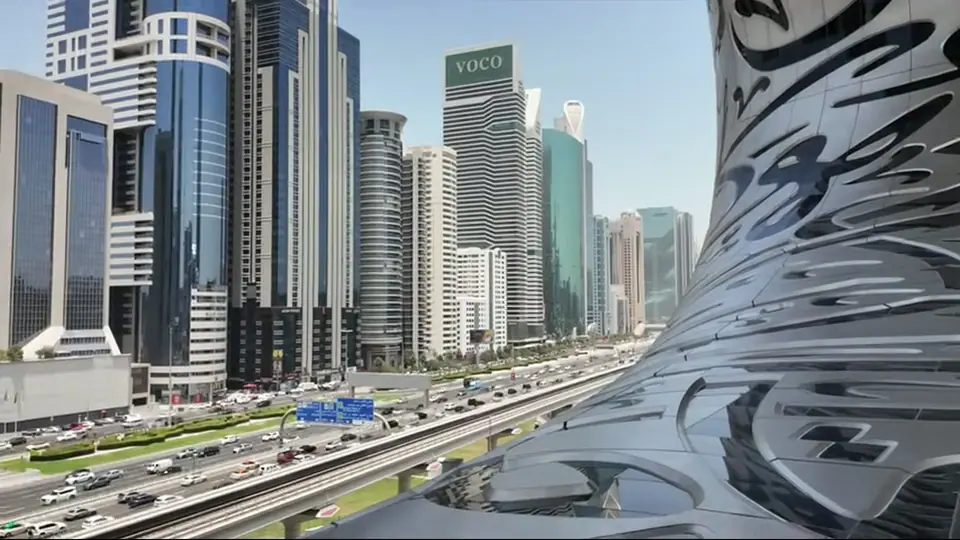
The Museum of the Future is located on Sheikh Zayed Road. If you are using the Dubai Metro, get off at the Emirates Towers station on the Red Line and follow the signs for the 15-minute walk through the covered, air-conditioned pedestrian bridge that leads directly to the museum entrance.
For those arriving by taxi, use the designated drop-off area at the base of the building, though you should account for heavy traffic on the main highway during peak hours.
Entry requires a pre-booked ticket starting at 149 AED, as time slots are typically reserved two to three weeks in advance. Upon arrival, have your digital QR code ready for scanning at the turnstiles. You will likely encounter a short queue for the themed elevator that transports groups to the starting point of the exhibition on the top floor.
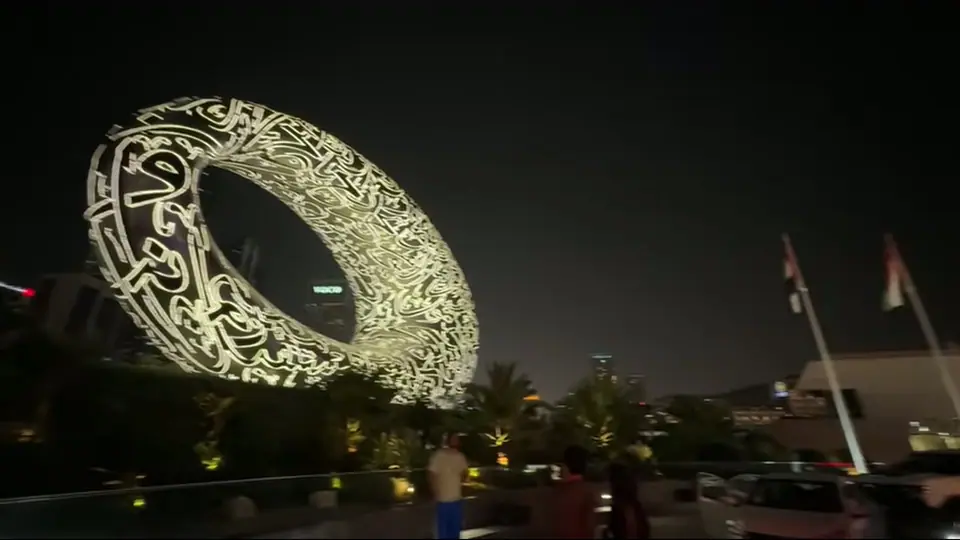
The Museum of the Future is located on Sheikh Zayed Road and is most easily reached via the Emirates Towers Metro Station. A direct, air-conditioned bridge connects the station to the building, but the walk takes approximately 15 minutes.
It is essential to factor this time into your arrival to ensure you do not miss your scheduled entry slot. Even with a confirmed booking, expect a short wait in the lobby as staff manage the flow of visitors into the elevators.
The experience follows a strictly linear path, beginning with a simulated shuttle flight to the upper levels and descending floor by floor. Once you exit a gallery or the observation deck to move to the next level, you cannot return to the previous section. Ensure you take all desired photographs and explore each installation fully before moving forward.
A complimentary cloakroom and luggage storage service is available on the ground floor for visitors. While small handbags and standard backpacks are allowed inside, large suitcases and bulky items must be checked in before entry.
The museum is fully accessible; strollers are permitted throughout the galleries, and dedicated elevators ensure a barrier-free transition between the floors.
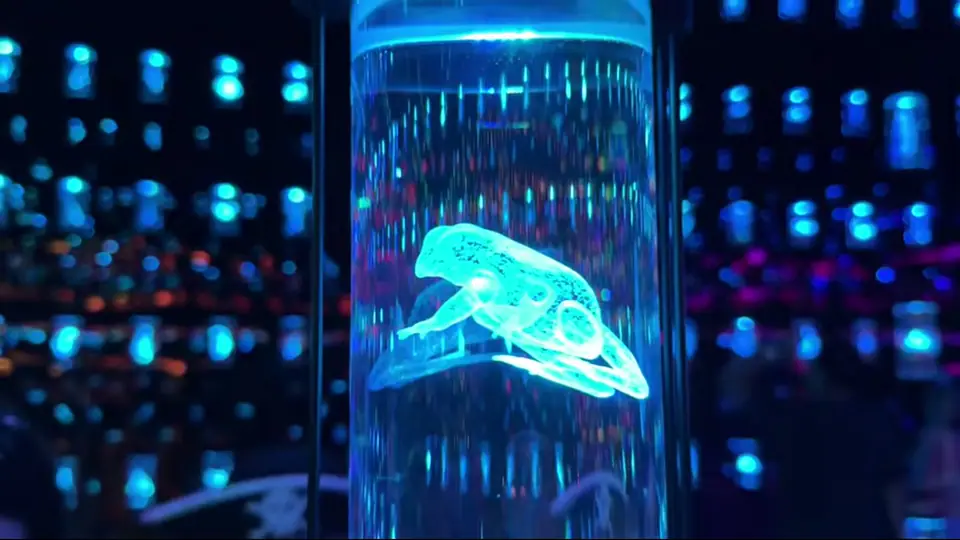
Start your morning with a journey into tomorrow at the Museum of the Future before the peak crowds arrive. Afterward, take a short walk to the DIFC district for a sophisticated lunch at Zuma or a healthy bite at Wild & The Moon.
Spend your afternoon browsing the contemporary art galleries along Gate Avenue, then finish the day with a short metro ride to the Dubai Mall to watch the fountain show at the foot of the Burj Khalifa.
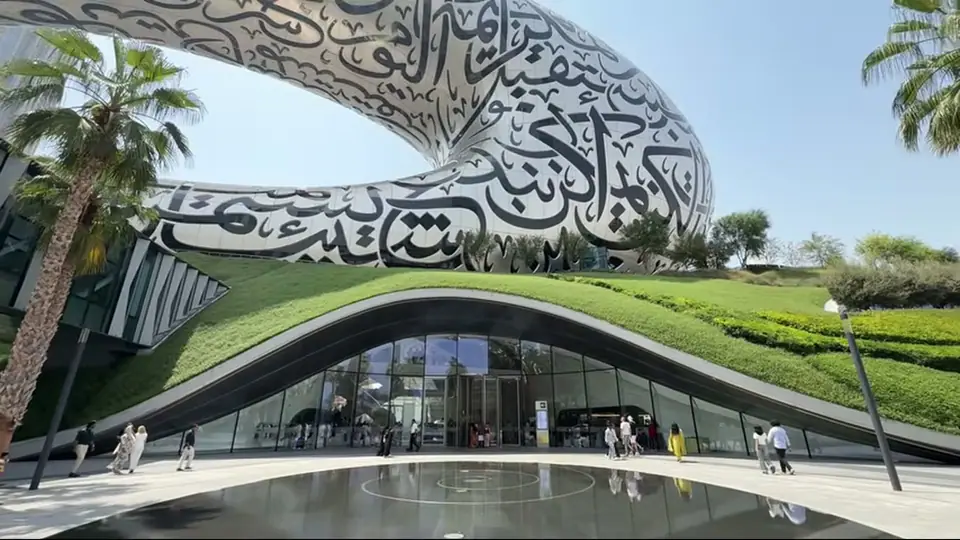
The Museum of the Future was established as a departure from traditional history-focused institutions. Instead of looking back at artifacts, it serves as a "living laboratory" designed to explore the possibilities of the coming decades.
It functions as a hub for global thinkers and innovators, focusing on how technology, spirituality, and ecology might evolve to solve global challenges.
The building itself is a masterpiece of symbolic engineering. Its torus shape represents humanity, while the green hill it sits upon signifies the earth. The central void is perhaps the most significant element, symbolizing the unwritten future and the unknown potential that lies ahead.
The stainless steel facade is wrapped in Arabic calligraphy, featuring quotes about the role of innovation in shaping the world.
For today’s visitor, the museum is an immersive narrative journey rather than a collection of displays. The experience moves through themed zones—ranging from space exploration to bio-engineering—designed to provoke thought through sensory engagement.
Because the route follows a strict linear path from the top floor down, the layout ensures that every visitor experiences the transition from global vision to personal impact.
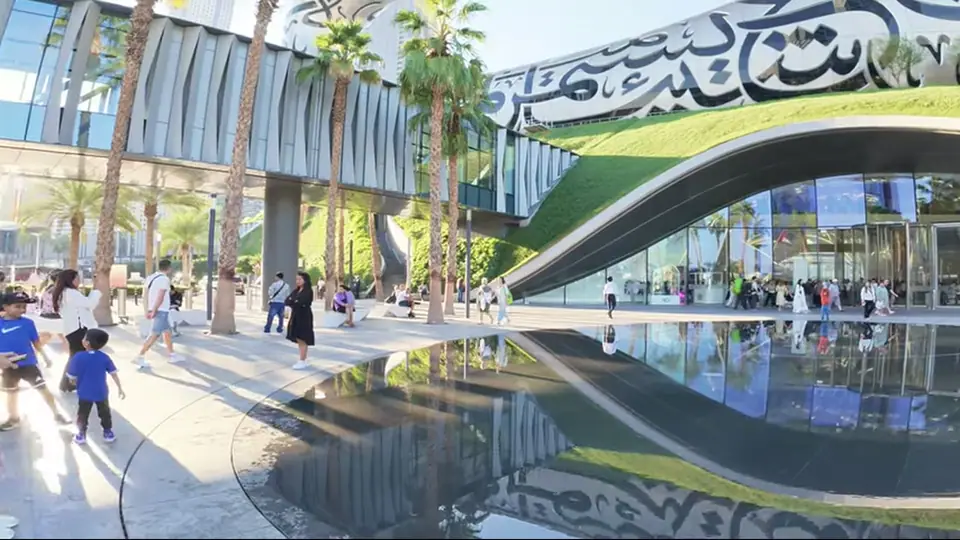
The Museum of the Future is fully accessible for wheelchair users and visitors with reduced mobility. All floors are connected by large, high-capacity elevators, and the exhibition spaces feature wide, level pathways. People of Determination receive complimentary entry for themselves and one caregiver, provided they book their tickets in advance.
Children under 3 years old enter for free, though a zero-value ticket must still be booked online. All visitors under the age of 16 must be accompanied by an adult (21+) at all times.
Strollers are permitted throughout the museum, making it easy to navigate with infants, though a dedicated stroller parking area is available near the entrance for those who prefer to explore on foot.
The first floor features 'Future Heroes,' a dedicated space for children under 10 that focuses on play-based learning and interactive tasks.
Parents should note that the elevator journey to the start of the exhibition simulates a space shuttle launch with vibrations and loud audio, which may be intense for some toddlers.
While the museum is connected to the Emirates Towers Metro Station via a covered bridge, the walk takes approximately 10 minutes, so allow extra time when traveling with small children or elderly family members.
Restrooms
Clean, high-tech restrooms are available on every floor of the museum and are free for all visitors. Because the exhibition follows a one-way path from the top floor down, it is recommended to use the facilities as you encounter them, as returning to a previous level is not permitted.
Dining
The lobby features a modern cafe where a robotic barista prepares coffee. For more substantial meals, a restaurant on the ground floor offers a variety of international dishes in a bright, futuristic setting. Food and drinks are not allowed inside the main exhibition galleries.
Gift Shop
A large retail space is located on the ground floor near the exit. It specializes in sustainable products, futuristic gadgets, educational toys, and exclusive museum-branded apparel and souvenirs.
Connectivity and Comfort
Free high-speed Wi-Fi is accessible throughout the building. The museum is fully equipped with dedicated prayer rooms, private nursing rooms for parents, and water fountains located near the restroom blocks on various levels.